Art of the Bag: Penina’s Top Ten
As I write this post, a personal Pinterest board I’ve titled, “Art of the Bag" has 136 pins. That’s less than I feared, but still quite a lot of information to process in pursuit of functional beauty. I considered starting a new board (which would bring the total to 105)—maybe call it "Art of the Bag: Top Ten", but then realized it would be a nice thing to share on the blog.
My collection includes simple and elaborate shopping bags, purses and clutches. There are also electronics cases (which I may move to another board if things get much more out of hand), baskets and a small sampling of the grandmother of all bags, Furoshiki.
Let's start there.
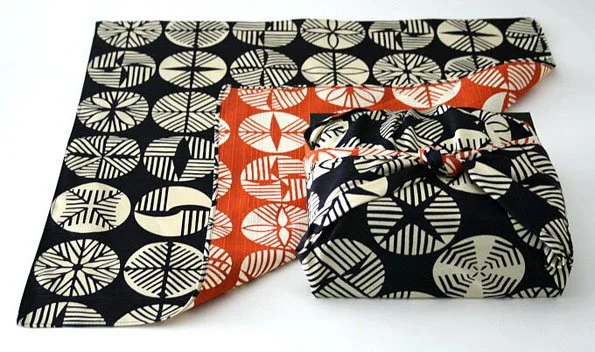
Furoshiki Set, Hibiki-an.com
Furoshiki are a type of traditional Japanese cloth that can be folded in a number of ways to create a container for things like clothes, gifts and groceries. There are all sorts of techniques for adapting the cloth to different functions. My favorite Furoshiki have coordinating or contrasting sides, like the example above.
In another nod to amazing Japanese design, here’s a beautiful and simple food packaging example, by akaoni.
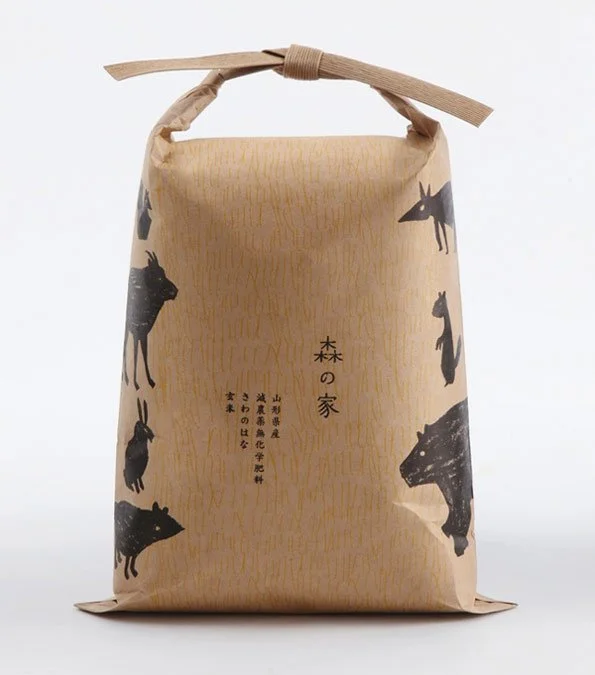
Food packaging by Japanese design studio, akaoni
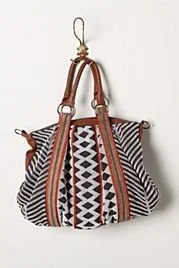
Bag by Anthropologie.eu: looks like it was discontinued
I generally choose to buy or make a bag I can be tough on. Odds are high that I'll put it down on something sticky. If it’s a shopping bag, it will probably live in the car and land on the kitchen floor while I'm unpacking groceries.
I rush, I jam one more item into an already-full bag, and I occasionally give promising-looking straps the watermelon test.
The cloth and leather bag at left appeals to me for those reasons, and also because the designer did more than just paste a decoration onto the surface. I love that the bold patterns are placed to fall and fold around the the structure of the bag. It's in use from the moment it's born.
Unfortunately, it looks like it's been discontinued and removed from the Anthropologie site. Alas, fashion.
On the other end of the toughness spectrum are lightweight, sparky and bright bags with delightful details, like this one, pinned from the C. Girly site (includes a tutorial).
The big blue bead and the gathered top rim, not to mention the genius colors, make this something I’d flaunt at a client meeting or other places I’m required to act like a proper designer/artist.
Even farther along the spectrum of "I will destroy this bag within half an hour of owning it, but it's so pretty!" is the clutch purse.
I don't clutch purses. Do you? I put those down and lose them.If they're interesting enough, I buy them to put in a larger shoulder bag, or my backpack, to hold chap stick (which eventually melts in the heat), a vial of Rescue Remedy and a lucky penny.
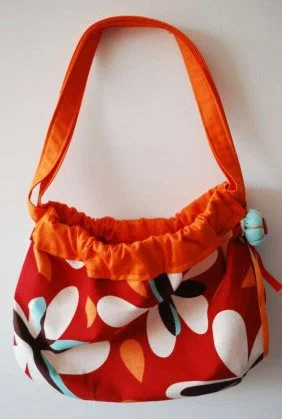
Tuto STS, by C. Girly
Here’s a clutch I consider more than worthy to wait quietly my backpack and be found like magic as I rummage through my stuff.
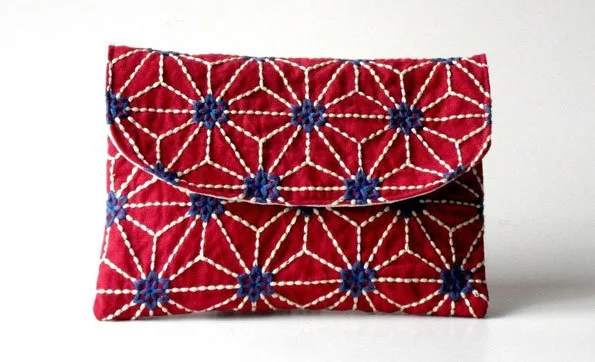
Embroidered pocket flap clutch, by Sacs Sofissima on alittlemarket.com
OK. Back to big bags. Whew!
Papa Totoro is printmaker who creates beautiful block-printed homewares and accessories (available on Etsy).
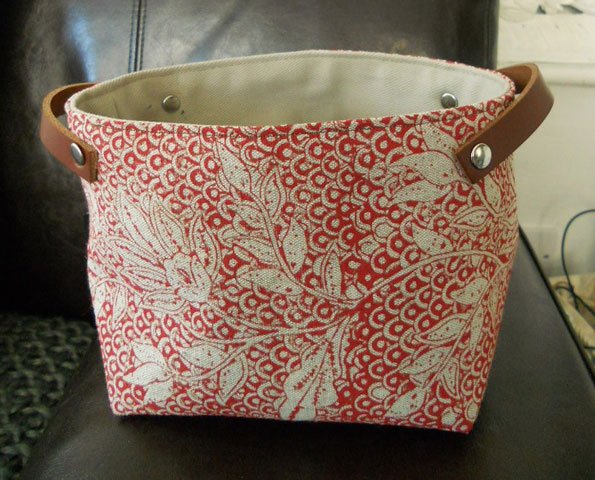
Block Printed Hamper by Papa Totoro
Geometrics can be a little too austere to live with (generally nice on printed stuff, though). Call this a basket or a hamper, Ferm Living has made the pattern warm with a muted, nature-inspired palette, and suited it (with scale and placement) nicely to the barrel-like shape of the object.
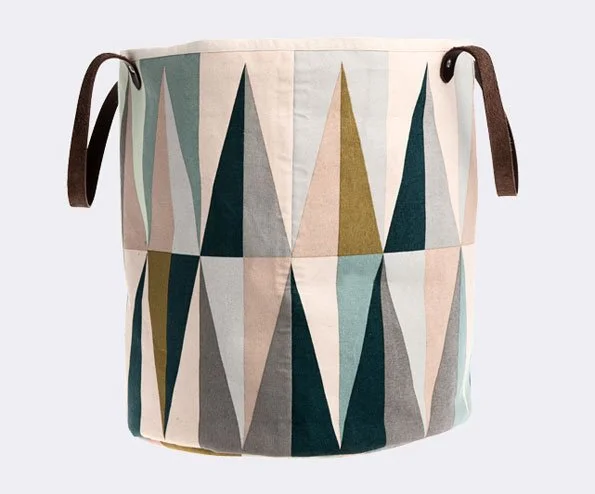
Spear Basket by Ferm (Germany)
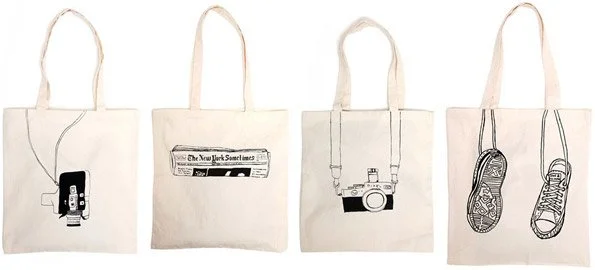
Simple Canvas Totes
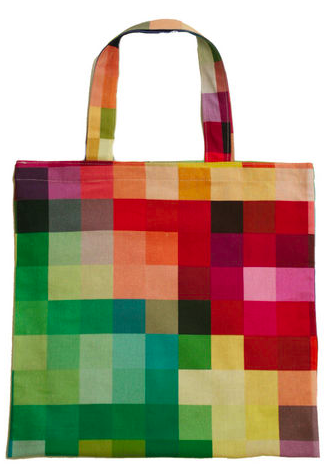
Color Chart Tote, by Cristian Zuzunaga
Let's not underestimate the simple, ubiquitous, canvas tote.
This one by Christian Zuzunaga, is no longer available, but still an inspiration.
There are plenty of lightweight canvas totes with a picture stuck on them. Craft stores sell blanks hobbyists can decorate for as little as a couple of bucks each.
Sometimes the right picture is enough to make you smile as you unscrunch it and fill it at the grocery store. Still, looking for ways to eloquently intertwine form with function, I've found a few that are visual poetry. The set below is one example.
Unfortunately, the domain the photo is associated with is no longer active, and I wasn't able to find artist credits or a seller.
And finally, have I mentioned I love Furoshiki?
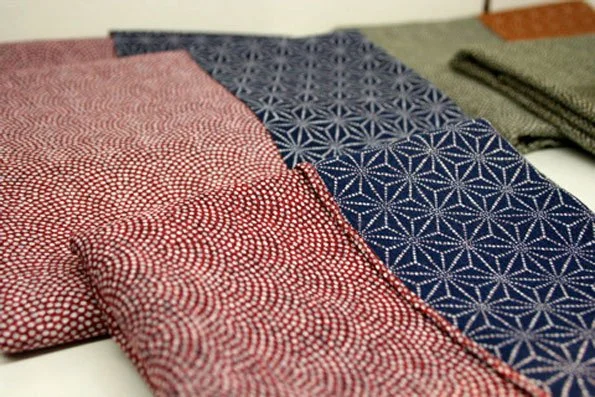
Traditional Furoshiki patterns at Karakusaya, a Kyoto shop