Why collaborative design?
Why Design Thinking? A Pattern Language? Social Practice? the list is growing, too (see some links at the end of this post).
I'm a fan. A lot of my reasons are pragmatic:
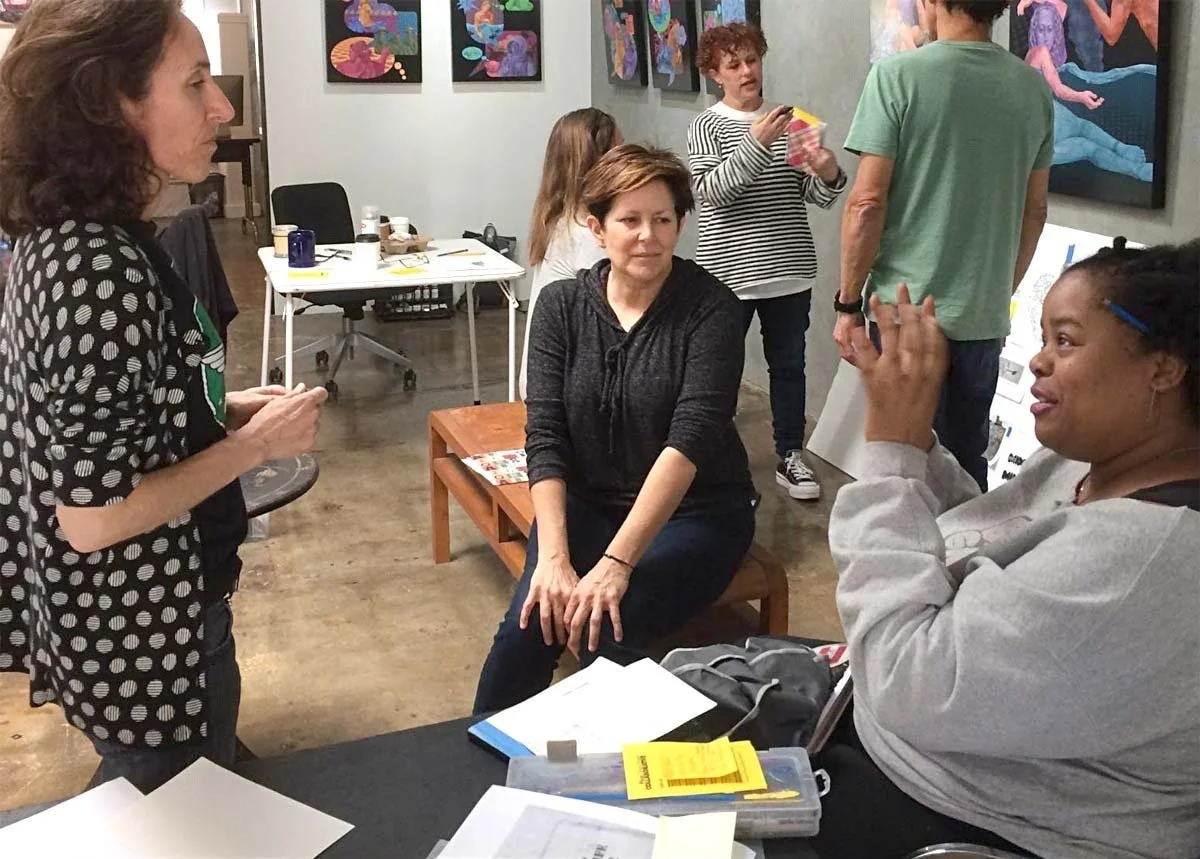
Collaborative processes lead to better design when people with different skills and from different backgrounds can provide diverse perspectives. This is especially true when collaboration is ongoing rather than only at the research stage of a project.
We now have lots of great systems and tools proven to overcome classic design-by-committee roadblocks and make design and development more efficient, and faster.
And we've seen how team members who know their input is valued are more likely to do their best work.
There’s also this:
Getting from idea to done can be hard. I often forget (though I'm getting better at remembering) that for a lot of people it can be terrifying. I've crossed that threshold enough times to recognize the hurdles, and to trust that pushing through is worth it. Not everyone has had the chance to experience this. Having at least one person on the team who’s ridden previous storms can give the whole team the confidence to persevere.
But no matter how broad one individual’s skillset ranges, it’s not enough for the complex challenges we face. When experience, new knowledge, diverse perspectives and a culture of listening come together, the unsolvable has a much better chance of being solved.
I won’t pretend collaboration is easy, especially with a larger group. There are, however, a lot of reasons the adage rings true:
“If you want to go fast, go alone. If you want to go far, go together.”
(Here’s a link to some entertaining discourse about the source of this quote.)
Learn more:
Design Thinking
designthinking.ideo.com
dschool.stanford.edu
luma-institute.com
toolkits.newhaircut.com
en.wikipedia.org/wiki/Design_thinking