Making place with Parasoleil
It took me forever to write down the story of collaborating with Parasoleil, designers and makers of beautiful architectural panel systems. In my defense, I haven’t had time to write much about anything (except poetry*). Still, the story remains worth telling.
From their About page, and also evident throughout their website, they work to bridge art and environment to create places where people want to be.
Even more meaningfully, they see their work from the perspective of the people who use those spaces. As a designer for whom the experience of those very people is integral to my work, that view resonates deeply.
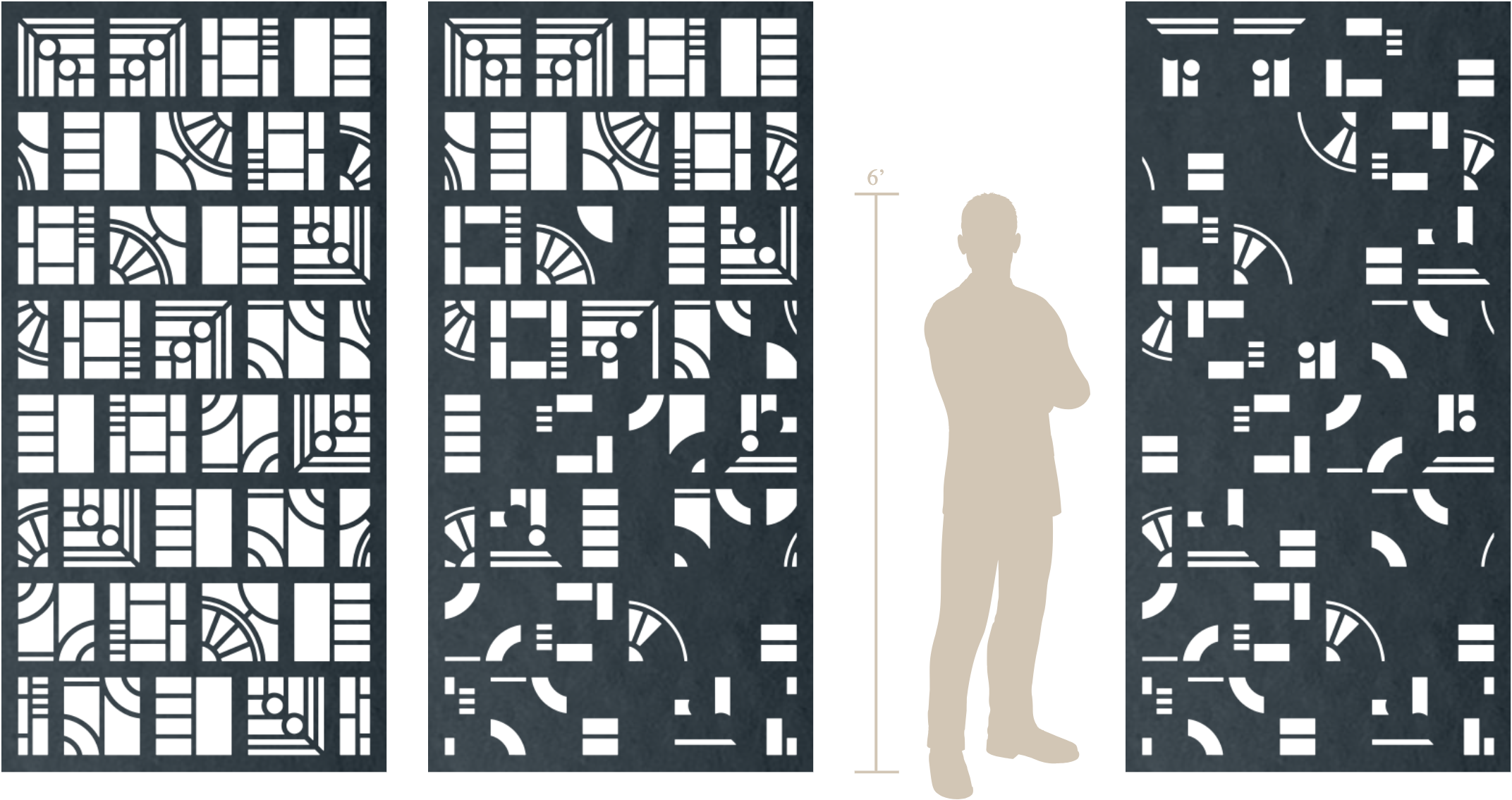
My panel designs, from left to right: The Intercontinental, Metropolis, and Night Life.
Early in 2024, Parasoleil posted a call for submissions to their Limited Artist Collaboration Series. I think I managed to email my submission less than an hour before the midnight deadline, having forgotten about the mountain-to-pacific time difference! Soon after, and to my very great delight, Parasoleil CEO Tanner Flynn called to let me know I was one of the eight designers and artists selected.
After introductions, the design process began. Parasoleil founder, Uriah Bueller, was there to answer questions and clarify the design-for-manufacturing principles we’d need to develop our ideas for the built environment. In addition to making himself generously available, he introduced the Pattern Map he had developed: a design framework that defines the elements of pattern within the context and constraints of architecture.
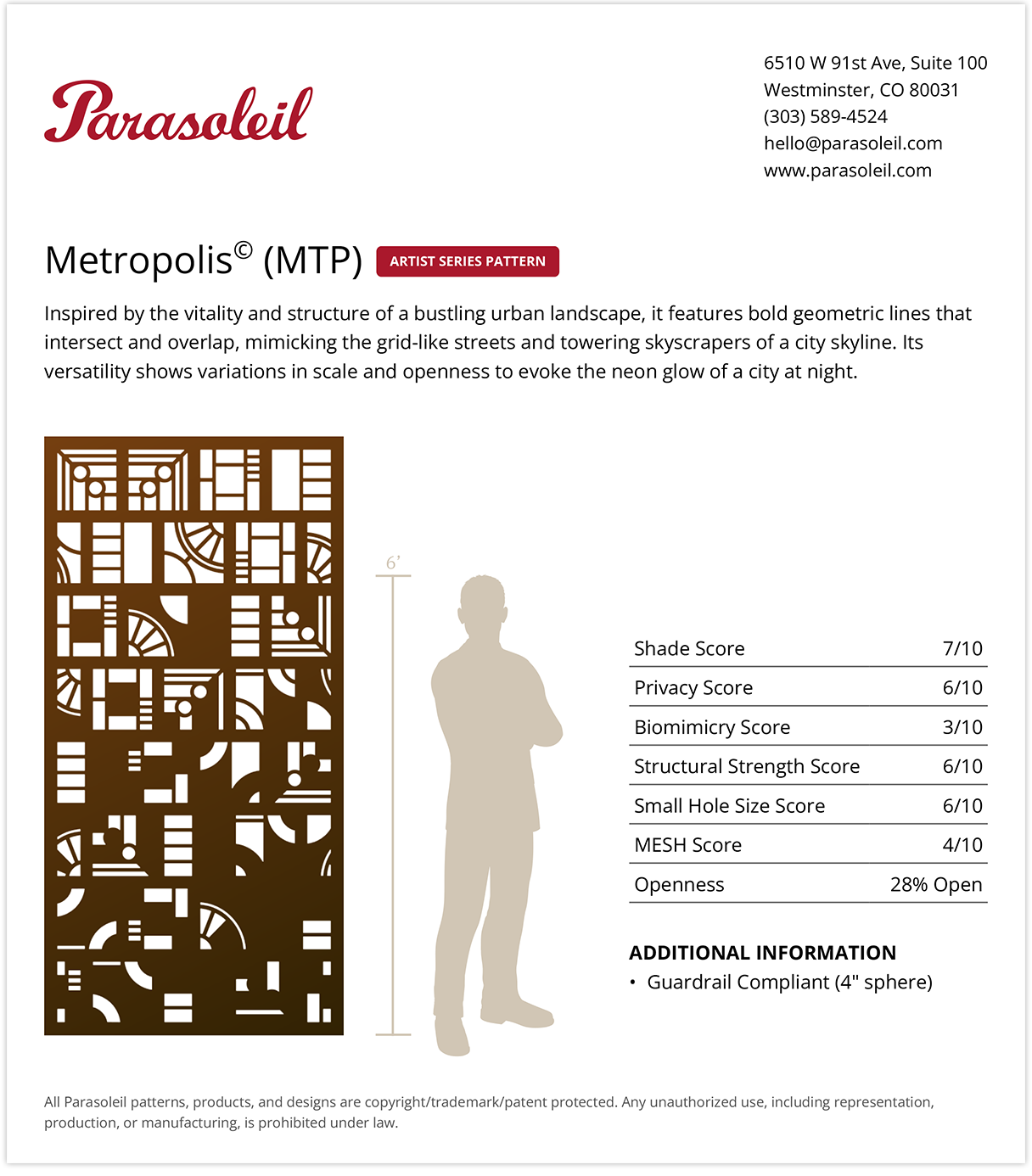
I’ve worked on less structurally demanding architectural projects with similar materials, but an 8’x4’ panel that must withstand much greater environmental stresses is a fantastic learning opportunity. Also, to think about a presence at that scale (keep in mind, the panels are installed in multiples) is humbling. It must be that much more safe. It must be that much more respectful of the human beings who will live with it.
I have been working as a design leader in ultra-abstract digital and AI spaces for many years, with increasingly rare opportunities to create something physically tangible. Still, when working on far-reaching digital-only initiatives, the potential impact puts similar demands on the design. Could someone become disoriented or “fall through a gap”?
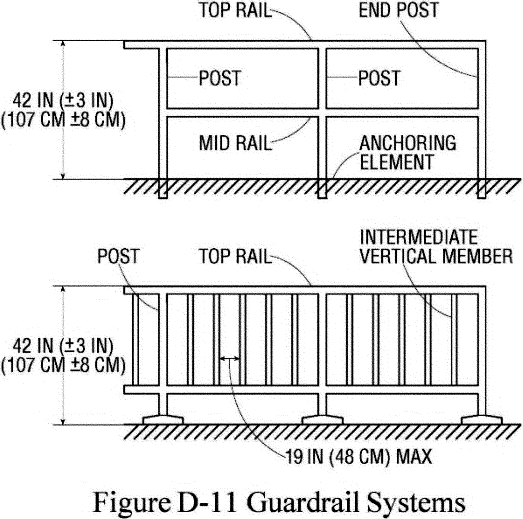
Conforming to OSHA guidelines is only a fraction of the requirements. Credit: osha.gov
For me, complex design challenges have an irresistible appeal. And the chance to create something beautiful for the built environment, positively shaping the places where people live and work, is something I would love to do more and more of.
I’ve sent notes of thanks to the team, but again: big thanks to everyone at Parasoleil for inviting me to create along with them.
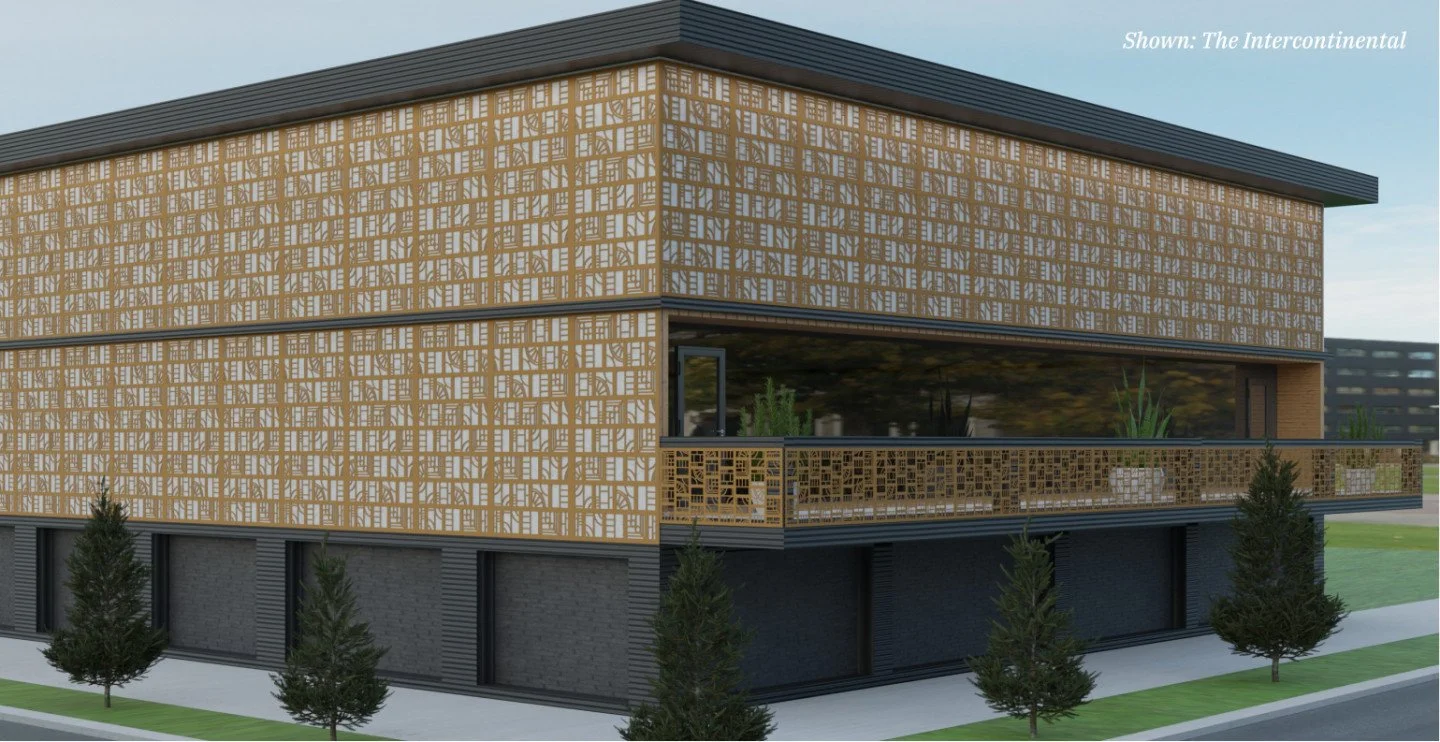
Here’s the list of the full cohort selected for Parasoleil’s Artist Series Collaboration:
Amit Hindocha
Misha Semenov Leiva
Nervous System (Jessica Rosenkrantz and Jesse Louis-Rosenberg)
Penina Finger
Rae Ripple
Sandra Fettingis
Sukanya Mani
Virgil Ortiz
See all the patterns here.
*Speaking of poetry, check out, Machine to Machine, recently published (May 2026) in The Meniscus Literary Journal.